

Vape Tax: Everything you Need to Know
What to Expect from the October 2026 Tax Changes. Learn how they will impact costs and businesses.
October 2026 is just around the corner and with it comes the much-anticipated introduction of the vape tax which has been dubbed the second most monumental event in vaping history since the Tobacco Products Directive (TPD) of 2017, this new legislation promises not just a tax but a complete shake-up of how the industry operates.
When Does the Vape Tax Start?
The vape tax officially comes into effect on 1st October 2026 and businesses across the vaping sector are already gearing up to navigate this labyrinthine tax system.
The idea behind the tax is mainly about public health and balancing the price difference between cigarettes and vapes. Right now vaping is generally much cheaper than smoking, which is one of the reasons many people switch. The government has said they want vaping to remain cheaper than cigarettes but they also want to introduce some duty on e-liquid. That means the price of vape juice will go up once the tax comes into force.
When Does the Vape Tax Start?
The vape tax officially comes into effect on 1st October 2026 and businesses across the vaping sector are already gearing up to navigate this labyrinthine tax system.
The idea behind the tax is mainly about public health and balancing the price difference between cigarettes and vapes. Right now vaping is generally much cheaper than smoking, which is one of the reasons many people switch. The government has said they want vaping to remain cheaper than cigarettes but they also want to introduce some duty on e-liquid. That means the price of vape juice will go up once the tax comes into force.
How Much will Vapes Be When Taxed
The easiest way to understand it is that the tax will be charged at £2.20 per 10ml of e-liquid, so the bigger the bottle or pod, the bigger the tax attached to it.
100ml Shortfills
Shortfill e-liquids were made almost as a loophole around the TPD that enforced laws for e-liquids in 2017 and for a number of years they absolutely dominated the market. Shortfills are not as popular today but there is still a huge market for it. At the moment many of these sell for around £15 RRP.
Under the new duty system, a 100ml bottle would carry £22 of tax because there are 10 x 10ml units inside the bottle. That means a product that used to retail for about £15 would realistically need to retail for around £37 after the tax is applied. That alone is a huge jump and it changes the value proposition of shortfills quite dramatically.
Shortfills also normally come with free nicotine shots so users can add nicotine to their bottle after purchase. These nic shots are usually 10ml each and most people add two nic shots to a 100ml bottle. Even if shops continue giving nic shots away for free, the tax still applies to the liquid itself. Each nic shot would carry £2.20 in duty, meaning two shots would add £4.40 in tax. When you combine that with the £22 duty on the shortfill itself, the total tax attached to that setup becomes £26.40. In practical terms, a shortfill that once cost £15 could easily end up costing around £41 when used with two nic shots.
In my opinion and many people in the industry’s opinion, shortfills may struggle to survive the vape tax. They were originally popular because they offered excellent value compared with smaller bottles and I just cant imagine there being a market for this product after the vape tax comes in.
10ml Nic Salts
The situation is slightly different with 10ml nicotine salts which are often sold in bundle deals such as four bottles for £10. Under the new duty each 10ml bottle will have £2.20 of tax added. If you bought four bottles the duty alone would be £8.80, meaning the same deal would realistically move from £10 to around £18.80. This product type will probably still exist after the tax but I have to honest, shoppers should expect offers to look more like two nic salts for £10 rather than the traditional four for £10 deals many people are used to.
Prefilled Pod Systems
Interestingly, small prefilled pod devices will be affected the least. Products like the Elf Bar EB600 or Lost Mary BM600 only contain 2ml of e-liquid, which means the duty attached to each device will be around 44p. Because shops already sell these products at slightly different prices, many customers may barely notice the increase.
Larger big puff prefilled pod systems such as the Lost Mary BM6000, PIXL 8000 or Nera 15k will sit somewhere in the middle. These devices usually contain 10ml refill pods, so the duty applied will be £2.20 per device. That is not enough to wipe out the category entirely but it is enough for customers to notice the difference, particularly heavy vapers who buy them regularly.
The Technical Headache for Vape Companies
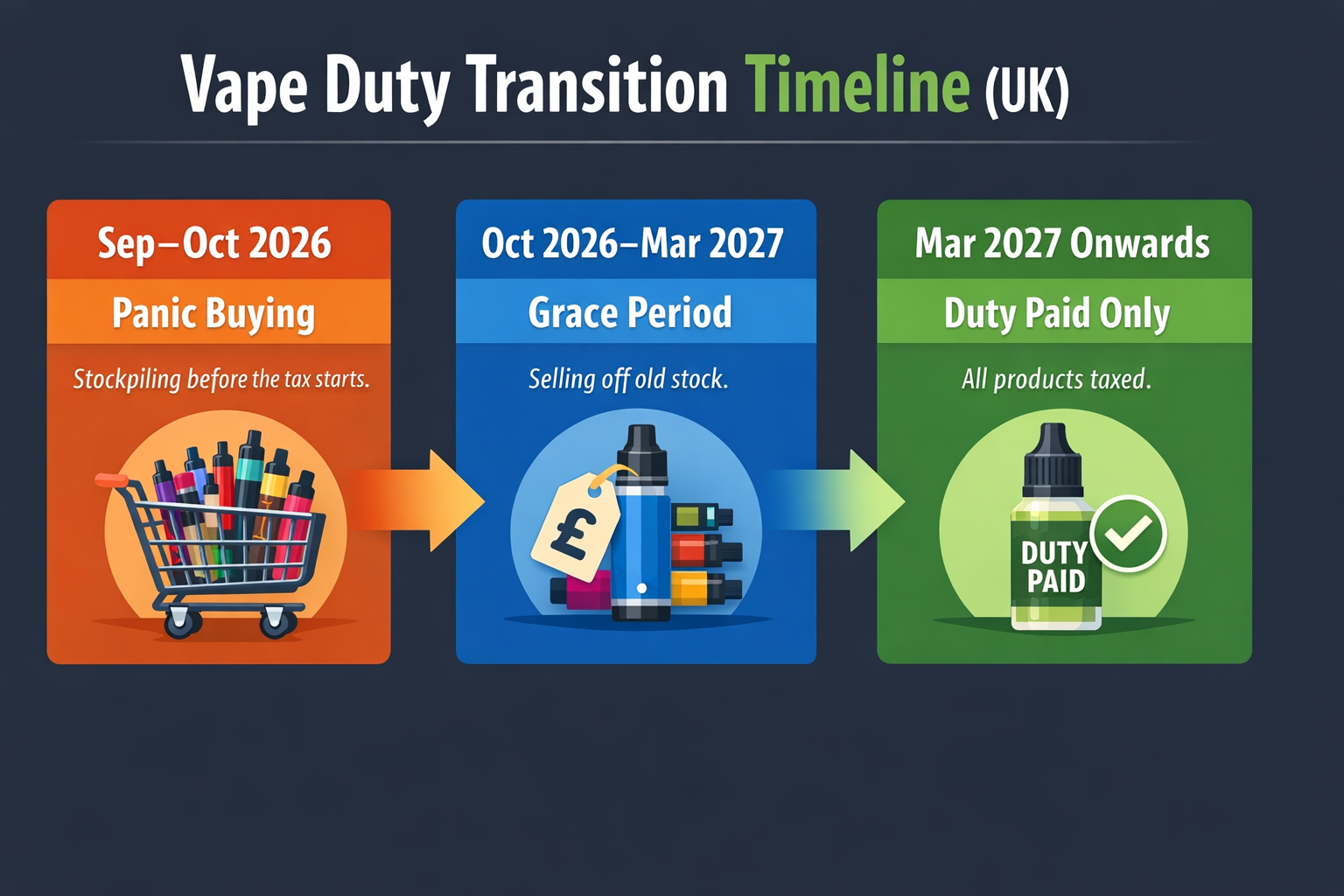
This is where things start to get technical, so I sat down with Richard Brookes, founder of Touch of Vape, to get his take on the upcoming vape tax and, more importantly, how it is likely to affect vape retailers.
According to Richard, the best way to understand what is about to happen in the market is to break the whole situation down into three clear stages.
“I think you need to dissect the vape tax into three stages,” he explained. “First there will be the panic buying stage, then there will be the in-between period and finally there will be the aftermath once the tax has fully settled into the market.”
Stage 1: Panic Buying
“Panic buying is definitely going to happen. That train is 100% coming. I can’t imagine a single vaper not looking to stock up before the vape tax is enforced. We’ve already seen this behaviour before. When the TPD regulations came into force in 2017 there was a wave of customers buying up products before the rules changed and the same thing happened again ahead of the disposable vape ban in 2025. Its almost systematic that each time the industry faces a major regulatory shift, customers naturally try to get ahead of it by buying what they can while prices are still lower or products are still available.
Because of that history of panic buying in the vaping industry, it feels almost inevitable that the same pattern will repeat itself with the vape tax. Customers have panic bought in the past and there is very little reason to believe they won’t do exactly the same thing again this time.”
Stage 2: The In Between Stage
“As it stands, retailers are expected to have a grace period to sell through their existing stock before moving fully onto duty paid products. The suggested transition window is from October 2026 through to March 2027.
I think this period will create disruption across the market. Larger retailers with big budgets will have the ability to stock up heavily in advance and if they do that, they could potentially sell non duty paid stock for several months while their competitors have already moved onto taxed products. Smaller retailers who do not have the cash flow to buy large quantities ahead of time may be forced to start selling duty paid stock much sooner.
That creates a situation where two shops on the same high street could be selling exactly the same product at completely different prices. One retailer might still be selling a 100ml bottle for £15 while another has no choice but to sell the same product for around £37. When the difference is that big, it is obvious which shop most customers will choose.
In my opinion, this transition period could push a lot of vape retailers out of the market. If a business does not have the budget to stockpile products in advance, it may find itself selling much more expensive duty paid stock while competitors continue selling cheaper pre tax stock. That makes the business instantly less competitive and over time customers will naturally drift elsewhere through no fault of the retailer.
At the same time, there is also a significant risk for the larger retailers who do have the ability to stock up. Buying huge quantities of stock months in advance requires a massive upfront investment. They could be committing tens of thousands of pounds without any real guarantee that the demand will still be there. Customers may have already stocked up themselves during the panic buying phase which means sales could slow down just as retailers are sitting on large volumes of inventory.
Because of all of this, the in-between stage could be the most chaotic period the vape industry has experienced so far. With massive price differences between shops, shifting demand from customers and retailers taking big financial risks on stock levels, it is likely to be a very unpredictable six months for the entire market.”
Stage 3: The Aftermath
“The biggest shift will likely happen during the six month grace period. After that point I think the market could look very different, with far fewer independent retailers and a stronger presence from larger chains that have the capital to adapt.
Many smaller businesses may find the transition extremely difficult. Some will leave the market voluntarily because the margins no longer make sense while others may simply be forced out because they cannot compete with retailers that stocked large quantities before the duty came into effect.
Consumer behaviour will also play a role. A large number of vapers may have already stocked up before the tax date while others may decide the price increase is enough to push them to quit altogether. Both outcomes reduce demand in the short term which adds even more pressure on retailers trying to survive the transition.
That is why the period after the grace window closes is the most uncertain stage. No one truly knows what the market will look like once the stockpiled products have been sold and everything on shelves carries the new duty. The structure of the industry, the number of retailers operating and even the size of the customer base could all look very different. This aftermath stage will ultimately determine whether the market stabilises or whether the industry contracts significantly.”
What Does The Government Get From This.
The HMRC published an article in November 2025 called the Introduction of Vaping Products Duty from 1 October 2026 and within this article they touch on the Exchequer impact:-
2026 to 2027 +£135 million
2027 to 2028 +£400 million
2028 to 2029 +£465 million
2029 to 2030 +£530 million
2030 to 2031 +£565 million
These figures are set out in Table 4.2 of Budget 2025 and have been certified by the Office for Budget Responsibility. More details can be found in the policy costings document published alongside Budget 2025.
Summary
The introduction of vape duty in October 2026 represents one of the most significant regulatory changes the UK vaping industry has faced. While the timeline and tax structure are now clear, the true impact of the policy will only become visible as the market moves through each stage of the transition.
The months leading up to the tax date will likely be marked by stockpiling from both retailers and consumers, followed by a six month grace period where older, non duty paid stock can still be sold. During this phase the market may become highly uneven, with some retailers able to sell products at far lower prices than others depending on their stock levels and purchasing power.
Once the grace period ends in March 2027 the industry will enter a completely new environment where every product sold must have duty paid. At that point pricing, competition and consumer demand will begin to stabilise and the long term structure of the market will become clearer. Some retailers will adapt while others may exit, and manufacturers will likely innovate to respond to the new cost pressures.
What happens after this transition remains uncertain. Consumer behaviour, regulatory enforcement and retailer adaptation will all influence how the industry evolves. What is clear is that the vaping market in the UK will not look the same after 2027, and the months surrounding the duty introduction will play a critical role in shaping its future.